
 Facebook
 X
 Pinterest
 Copy Link
For University of Miami families, finding the right housing solution is about more than securing an apartment for the academic year. It is about balancing convenience, lifestyle, long-term costs, and the possibility of turning a temporary housing need into a real estate investment.
At a recent State of the Market event hosted by Cassia Residences, The Residences at Coral Gables, I had the opportunity to hear a distinct perspective from Ignacio Montes, President of Alta Developers. One theme stood out: buyers are becoming more discerning about where they purchase, what they receive for their investment, and the total cost of ownership.
For families with students at the University of Miami, these considerations are especially relevant as Coral Gables continues to evolve.
1. University of Miami’s Expansion Could Change the Housing Conversation
The University of Miami is planning for its next chapter through its long-term Roadmap to Our New Century. A proposed agreement with the City of Coral Gables would allow the university to increase its permitted undergraduate enrollment from approximately 13,000 to 17,500 students—an increase of about 35%.
According to The Miami Hurricane, the agreement could bring an additional 4,500 permitted undergraduate places, while the broader discussion around UM’s expansion includes new campus facilities and a proposed hospital.
With approximately 64% of UM students living off campus, according to U.S. News & World Report’s student-life information, housing remains an important consideration for families navigating the university experience.
An increase in enrollment capacity does not automatically translate into an equivalent increase in local housing demand. However, it provides families with another reason to evaluate Coral Gables’ housing market and consider how their needs may evolve over the next several years.
For parents who anticipate multiple years of tuition and housing expenses, purchasing a property may be worth evaluating alongside the traditional rental option.
2. Buying Versus Renting: A Different Way to Think About Student Housing
Many families initially approach college housing as a four-year rental expense. But purchasing a condominium or other property introduces another possibility: owning an asset that may serve the family beyond graduation.
The right decision depends on the family’s financial position, expected holding period, financing terms, and plans for the property after the student moves on.
Potential advantages of purchasing include:
- A place for the family: A property can provide a consistent home base for a student and visiting family members.
- Potential long-term equity: Mortgage principal payments may build equity over time, although appreciation is never guaranteed.
- Rental flexibility: Depending on the building’s governing documents, applicable laws, and local requirements, an owner may be able to rent the property when the family is not using it.
- Future personal use: A condominium may eventually become a guest residence, a second home, or a downsizing option.
- Greater control over the living environment: Ownership can offer more stability than renewing a rental lease each year, subject to the property’s rules and financial obligations.
Renting still makes sense for families who want minimal responsibility, expect a short stay, or prefer not to commit capital to a property. Purchasing is not automatically less expensive, and the financial comparison should account for all ownership costs, not simply the mortgage payment.
3. The Real Cost of Ownership Matters
One of the most interesting takeaways from the Cassia event was the emphasis on understanding the total cost of ownership. As Ignacio Montes discussed the evolving buyer profile, the conversation reflected a more discerning market in which purchasers are carefully evaluating both value and ongoing expenses.
For families considering a condominium near UM, the purchase price is only the starting point.
Before making a decision, evaluate:
- Mortgage principal and interest, plus the down payment and closing costs.
- Property taxes and homeowners insurance.
- Condominium association fees and the services or amenities they cover.
- Current or anticipated special assessments and the association’s financial condition.
- Maintenance, utilities, furnishings, and reserves for unexpected expenses.
- Rental restrictions, minimum lease periods, and any applicable rental or management costs.
- Condominium assessments and insurance costs can materially affect the economics of ownership. Reviewing association financials, reserves, meeting minutes, governing documents, and the building’s assessment history is particularly important.
For families planning to own a property for several years, understanding these expenses upfront can help determine whether purchasing fits their financial goals.
4. Why Coral Gables Deserves a Closer Look
At the event, another important theme was the growing recognition that South Florida is not one uniform real estate market. Buyers are increasingly evaluating individual submarkets, including Coral Gables and Coconut Grove, based on their distinct lifestyles, amenities, and location advantages.
For UM families, Coral Gables offers proximity to the university, established residential neighborhoods, shopping, dining, and a distinctive sense of place. The city’s long-standing identity as “The City Beautiful” is part of its appeal.
The question is not simply whether to buy in Miami. It is whether a particular neighborhood and property align with a family’s day-to-day needs and long-term plans.
Location, transportation, building amenities, property type, and the intended holding period should all factor into the decision.
5. A Closer Look at Cassia Residences
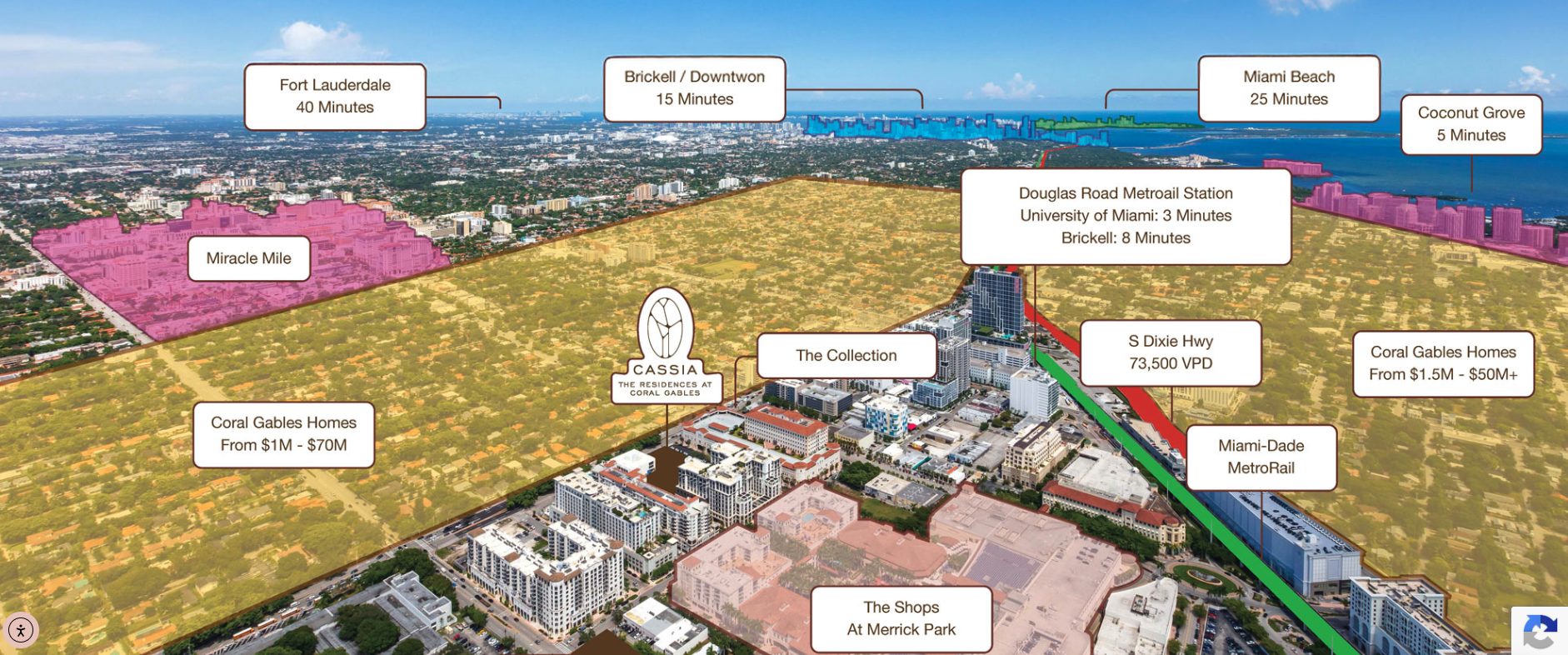
One development that illustrates this conversation is Cassia Residences, located in the Merrick Park District of Coral Gables.
Cassia is a boutique, 12-story condominium featuring 174 residences with turnkey furnishings by RH. The development offers one-, two-, and three-bedroom residences designed around flexible ownership and a furnished, move-in-ready experience.



According to the information presented at the event, the development was reported to be approximately 75% sold, with delivery anticipated in Q1 2027.
The property may be worth exploring for several types of buyers:
- University of Miami families: Parents looking for a furnished residence that could serve as a home base during their student’s college years.
- Investors considering flexible use: Buyers interested in personal use alongside potential rental income, subject to the condominium’s rules and applicable requirements.
- Local homeowners seeking a guest residence: Families who want a separate space for visiting relatives or other personal needs.
- Downsizers and second-home buyers: Purchasers seeking a more manageable residence with access to amenities and a central Coral Gables location.
Cassia’s turnkey furnishings are a notable differentiator for buyers who value convenience. However, a furnished residence is not necessarily the right fit for every family. It is important to compare the purchase price, association fees, amenities, rental policies, financing options, and projected ownership costs with those of other available properties.
6. Questions Every UM Family Should Ask Before Buying
Before purchasing a property for a University of Miami student, I recommend starting with a few practical questions:
- How long will we own the property? Consider the student’s expected time at UM and whether the family would retain the property afterward.
- Will we use it exclusively, or do we want rental flexibility? Confirm the building’s rental policies before making assumptions about future income.
- What is the complete monthly and annual cost? Compare ownership costs with realistic rental alternatives.
- How will the property be financed? Review down payment requirements, mortgage terms, closing costs, and the effect on the family’s broader financial plan.
- What is the association’s financial position? Examine reserves, assessments, insurance, maintenance plans, and governing documents.
- What is our exit strategy? Consider whether the family would sell, continue renting the property if permitted, or keep it for future visits.
The Bottom Line: Think Beyond the Academic Year
The University of Miami’s potential expansion, the importance of off-campus housing, and the continued evolution of Coral Gables make this an interesting time for families to reassess their housing options.
At Make Moves Miami, I help University of Miami families explore housing options in Coral Gables, Coconut Grove, Brickell, and surrounding neighborhoods. Whether you are comparing rentals with condominiums for sale or exploring a furnished residence with potential flexibility for future use, the goal is to find a solution that aligns with your family’s priorities.
Considering purchasing a property for your University of Miami student? Let’s discuss your timeline, budget, and plans for the property after graduation. You can reach me at 786-998-6683.
Make Moves Miami | Kristine Olson

